

In the realm of business, there exists a dichotomy as old as time itself: the age-old battle between boss vs leader.
We’re here to unravel the intricacies between these butting titles and guide you on a journey towards leadership greatness.
In today’s fast-paced world of business, the line between boss and leader can often blur, leaving many wondering: what truly distinguishes one from the other? Join us as we uncover the hidden truths behind these two archetypes and discover the transformative power of embracing a leadership mindset.
1. Boss vs Leader: Understanding the Key Differences
Often, the terms “boss” and “leader” are used interchangeably. Yet, the two roles are fundamentally different.
While a boss might be seen as the driving force behind task completion, a leader is the architect of a team’s vision and success.
To truly elevate an organization, it’s crucial to understand the distinct qualities and impacts of each.
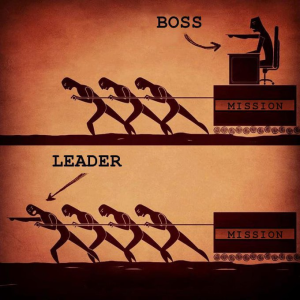
1.1 Definition and Characteristics of a Boss
Picture this: a boss struts into the office, barking orders left, right, and centre. Their word is law, and their presence sends shivers down the spines of even the bravest employees. Sound familiar?
That’s the boss mentality in action – a top-down approach where authority reigns supreme, and collaboration takes a backseat.
1.2. Definition and Characteristics of a Leader
A bosses vs leaders situation, while seemingly at odds with one another, are means to achieve a similar end: to unite your team. Now, let’s flip the script.
A leader doesn’t just lead from the front – leaders inspire, motivate, and empower those around them.
They’re not afraid to roll up their sleeves and get their hands dirty, and they understand that true leadership isn’t about wielding power, but about serving others.
Think of leaders as the stars in the galaxy of teamwork, illuminating the path to success with their wisdom and wayfaring charisma.
1.3. Bosses vs Leaders: Impact of Boss Mentality on Business Culture
Here’s the kicker: a boss mentality isn’t just bad for morale – it’s a recipe for disaster in the world of business.
When employees feel like cogs in a machine, rather than valued members of a team, productivity plummets, turnover rates soar and innovation grinds to a halt.
In short, a boss mentality can turn even the most promising business into a Titanic; not in terms of sheer magnitude, but a preventable strategy.
So, the million-dollar question is: how do we break free from the shackles of bossdom and embrace the path of leadership? Stay tuned, folks – we’re just getting started.
In summary,
A boss and a leader are two sides of the same coin, but they each have vastly different approaches to motivation.
2. Advantages of Being a Leader vs Boss in Business

Alright, team, now that we’ve uncovered the boss vs leader dynamic, it’s time to delve into why being a leader trumps being a boss any day of the week.
2.1. Building Trust and Loyalty Among Employees
A boss commands respect, but a leader earns it. When you’re a good leader, you cultivate trust and loyalty by genuinely caring about your team’s well-being and professional growth.
This isn’t just touchy-feely stuff – trust is the bedrock of any high-performing team.
Employees who feel valued and respected are more likely to go the extra mile, stay loyal and contribute to a positive work culture.
It’s the difference between having soldiers who follow orders and comrades who’ve got your back through thick and thin.
2.2. Fostering a Collaborative Work Environment
Real leaders don’t just give directions – they build bridges.
They create a space where ideas flow freely and innovation thrives whereas bosses tend to stifle creativity. When team members feel comfortable sharing their thoughts without fear of ridicule or reprimand, magic happens.
Collaborative environments are breeding grounds for creativity and problem-solving, leading to better solutions and a more engaged workforce.
Remember, two (or ten) heads are better than one, especially when they’re all working towards the same goal.
2.3. Encouraging Innovation and Growth
Bosses might stick to the tried-and-true methods, but leaders are the ones who push the envelope.
Encouraging innovation and growth means not just accepting change but championing it. Leaders inspire their teams to think outside the box, take calculated risks, and continuously improve.
This forward-thinking mindset is essential in today’s fast-paced business world, where standing still is akin to moving backwards. That being said, the boss and leader dynamic shouldn’t even be relevant to the discussion any more.
By nurturing a culture of innovation, leaders ensure that their businesses stay ahead of the curve and ready to tackle whatever challenges come their way.
3. Boss vs Leader: The Role of Communication

It’s time to talk about talking – or more accurately, the art of communication.
A leader’s ability to communicate effectively can make or break their team’s success. Let’s learn why communication is the secret sauce of great leadership.
3.1. Importance of Clear and Transparent Communication
Have you set off on a road trip to an unfamiliar place without a map or GPS? Sounds like a recipe for disaster, right?
The same goes for leading a team without clear and transparent communication.
Leaders who communicate with clarity set expectations, define goals and provide the direction needed to navigate the business landscape.
Transparency builds trust and ensures everyone is on the same page, reducing misunderstandings and aligning efforts toward common objectives.
Think of it as the difference between wandering aimlessly and cruising confidently toward your destination.
3.2. Active Listening as a Leadership Skill
Great communication isn’t just about talking – it’s also about listening. Another indicator of excellence within the boss vs leader competition is judged by the capacity of the two to *listen* better.
Active listening means fully engaging with your team’s ideas, concerns, and feedback.
It’s about asking questions, showing empathy, and making your team feel heard and valued.
This not only builds stronger relationships but also uncovers valuable insights that can drive your business forward. In short, active listening is your superpower for fostering a connected and motivated team.
3.3. Providing Constructive Feedback and Guidance
Nobody enjoys being criticised, but constructive feedback is essential for growth and improvement.
Leaders who master the art of providing feedback can guide their teams toward excellence without crushing their spirit. When employees feel supported and guided, their motivation for professional growth significantly increases. Research shows that motivation plays a crucial role on employees‘ performance.
Constructive feedback focuses on specific behaviours and outcomes, offering practical advice and encouragement for improvement.
It’s about creating a supportive environment where team members feel empowered to learn from their mistakes and strive for better performance. Remember, the goal is to build up, not tear down.
4. Boss vs Leader: Developing Leadership Skills and Qualities

Becoming a great leader isn’t something that happens overnight – it’s a continuous journey of learning and self-improvement.
To truly lead and inspire, you need to develop a set of core skills and qualities that will set you apart from just being the “boss.”
Let’s explore what it takes to cultivate the traits of an effective leader.
4.1. Empathy and Emotional Intelligence
The first item of discussion regarding the boss vs leader debate is empathy and emotional intelligence.
Simply put, empathy is the ability to understand and share the feelings of others, while emotional intelligence is about recognising and managing your own emotions and those of your team.
Leaders who are empathetic and emotionally intelligent create a supportive and inclusive environment. They can navigate complex interpersonal dynamics, defuse tensions and foster strong relationships within the team.
When your team feels understood and valued, they’re more likely to be engaged and motivated.
4.2. Decision-Making and Problem-Solving Abilities
A leader is often faced with tough choices and unexpected challenges. The ability to make sound decisions quickly and effectively is crucial.
This involves gathering relevant information, weighing the pros and cons and considering the long-term impact of your decisions.
Problem-solving is one of the key points of contention in the boss vs leader stalemate. Why?
It’s because problem-solving goes hand in hand with decision-making – it’s about identifying the root cause of issues and coming up with practical solutions.
A leader who excels in these areas can steer their team through turbulent times with confidence and clarity.
4.3. Inspiring and Motivating Others
Last but certainly not least, a great leader knows how to inspire and motivate their team.
This isn’t just about giving pep talks or setting ambitious goals – it’s about connecting with your team on a deeper level.
Share your vision and passion, and show them how their work contributes to the bigger picture. Recognise and celebrate their achievements, and provide opportunities for growth and development.
When your team feels inspired and valued, they’ll be even more committed and driven to achieve their best.
We know that developing these leadership skills and qualities takes a lot of time, practice and effort, but the rewards are well worth it.
Empathy, decision-making prowess, and the ability to inspire clarify the contrast between authority and leadership, with leadership clearly having a more profound impact.
5. Overcoming Challenges in Embracing a Leadership Approach
Transitioning from a boss mentality to a leadership mindset isn’t always a smooth ride. It comes with its own set of challenges that require patience, persistence, and a willingness to grow. Let’s explore some of the common obstacles and how to overcome them.
5.1. Managing Conflicts and Resolving Issues
Conflict is inevitable in any workplace, but how you handle it can make all the difference. As a leader, your role is to mediate and resolve conflicts constructively. This involves listening to all parties, understanding the underlying issues, and finding a solution that respects everyone’s viewpoints. Developing strong conflict resolution skills helps maintain a positive work environment and prevents small disagreements from escalating into larger problems.
5.2. Boss vs Leader: Authority vs Empowerment
Striking the right balance between maintaining authority and empowering your team can be tricky.
On the one hand, you need to assert your authority to guide and make final decisions.
On the other hand, empowering your team involves giving them the autonomy to take initiative and make decisions within their scope.
This balance can be achieved by setting clear boundaries and expectations, while also encouraging innovation and input from your team.
Show that you trust their judgement and support their growth, and they’ll be more likely to step up and take ownership of their work.
Transitioning to a leadership approach is not without its challenges, but each hurdle presents an opportunity to grow and improve.
By mastering the art of delegation, honing your conflict resolution skills, and finding the balance between authority and empowerment, you can navigate these challenges with grace and confidence.
Mastering the art of communication, delegation, and providing feedback makes you not only a better person, but a better leader and ultimately the market leader.
6. Conclusion
Navigating the fine line between being the boss vs leader problem is a transformative journey that can significantly impact your business’s success and workplace culture.
By understanding the key differences between the boss vs leader dynamic, you lay the foundation for a more effective and inspiring leadership approach. Embracing the advantages of leadership—such as building trust, fostering collaboration and encouraging innovation—can lead to a more motivated and loyal team.
Effective communication plays a pivotal role in leadership. Clear and transparent communication, coupled with active listening and constructive feedback, helps build strong relationships and a cohesive team.
Developing leadership skills and qualities, such as empathy, emotional intelligence, decision-making and the ability to inspire is essential for anyone looking to transition from a boss to a true leader.
Of course, this journey comes with its own set of challenges. Managing conflicts and balancing authority with empowerment are all hurdles that can be overcome with the right mindset and strategies.
Embracing these challenges as opportunities for growth will not only enhance your leadership capabilities but also strengthen your team and organisation.
In conclusion, the path from boss to leader requires continuous learning, self-reflection and a commitment to personal and professional growth.
Remember, the most successful leaders are those who inspire others to follow them on their journey to greatness.
So, are you ready to break free from the boss mentality and lead with purpose and passion? Your team and your business are counting on it.
Ready to take your business to the next level? At Authority Institute, we are framework developers specialising in growth frameworks and consulting & advisory solutions. Connect with us today to discover how our expertise can drive your business forward.
